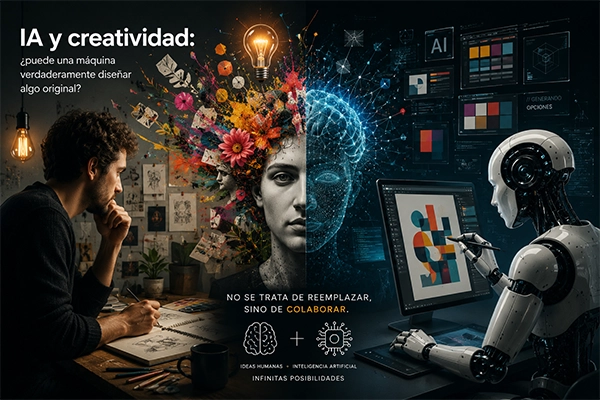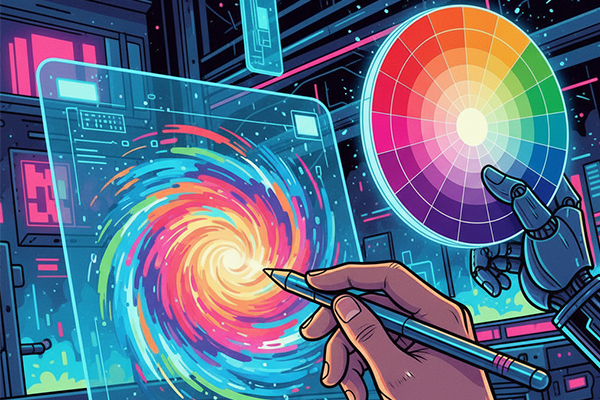
Artificial intelligence (AI) has transformed graphic design, offering tools that streamline creative processes with speed and precision. One of the most popular applications is the automatic generation of color palettes. With AI, designers can instantly access color combinations aligned with brand values or a desired style.
But this raises an important question: how much should we trust AI-generated palettes—and how do we ensure they remain authentic, coherent, and effective?
What is generative AI for color palettes?
Generative AI for color palettes refers to systems that analyze design trends and color theory to create harmonious combinations based on specific inputs.
These tools can generate palettes based on:
- Desired emotions (joy, calm, seriousness, etc.)
- Brand values and identity
- Current design trends
Platforms like Adobe Color, Canva, and Coolors already integrate AI to simplify this process.
Advantages of AI in color palette generation
1. Speed and efficiency
AI can generate palettes in seconds—ideal for tight deadlines.
Instead of manually testing combinations, you get immediate, structured options.
2. Design consistency
AI relies on established color harmony principles (complementary, analogous, etc.), ensuring visually cohesive results.
This helps maintain consistency across an entire project.
3. Inspiration for beginners
For less experienced designers, AI offers a strong starting point.
It provides ready-made palettes that help build understanding of color theory fundamentals.
Limitations of AI-generated palettes
1. Lack of cultural and contextual sensitivity
AI doesn’t fully understand cultural meaning.
Colors carry different symbolism across regions, and AI may overlook this nuance.
2. Limited creativity
AI works within learned patterns.
It doesn’t truly experiment or break rules the way human designers can.
3. Weak alignment with brand strategy
AI can generate visually pleasing palettes—but not always strategically correct ones.
Example:
A financial brand may need trust-driven colors (blue, gray), but AI might suggest brighter tones that don’t fit the message.
How to use AI color palettes effectively
1. Combine AI with human intuition
Use AI as a starting point—not the final decision.
Refine colors based on emotion, context, and brand identity.
2. Customize based on context
Always adapt the palette to:
- The brand
- The message
- The target audience
3. Run A/B tests
Test different palettes in real scenarios:
- Websites
- Landing pages
- Campaigns
Measure engagement and conversions to validate effectiveness.
Conclusion
Generative AI for color palettes is a powerful tool—but not a complete solution.
It accelerates processes, provides inspiration, and improves efficiency. But human creativity remains essential to ensure the final result is meaningful, strategic, and aligned with the brand.
The key is balance:
AI provides speed. Humans provide meaning.
At Esbozo, we see AI as an ally—not a replacement. Because great design isn’t just about harmony… it’s about intention.