The intersection of artificial intelligence (AI) and creativity is a fascinating space that is reshaping the future of graphic design. While AI offers tools that can enhance human creativity, it also raises questions about the boundaries between human and machine-generated creativity. This convergence is opening new possibilities in design while challenging traditional ideas of what it means to be creative.
Enhancing Human Creativity
One of the key ways AI intersects with creativity is by amplifying designers’ creative capabilities. AI-powered tools, such as generative design systems, allow designers to explore multiple design solutions in seconds—something that would be impossible to achieve manually. These systems generate a wide range of variations based on parameters set by the designer, enabling experimentation and faster decision-making. In this sense, AI acts as a catalyst for creativity, expanding the range of possibilities available to designers.
The Role of Human Intuition
Despite AI’s advanced capabilities, human creativity remains irreplaceable. Intuition, judgment, and the ability to make decisions based on context and emotion are aspects that AI cannot replicate. For example, AI can suggest color combinations or styles based on historical data, but it is the designer who decides how and when to apply those suggestions to achieve the desired outcome. Creativity is not just about generating options—it’s about making meaningful choices that resonate with an audience.
Collaboration Between AI and Humans
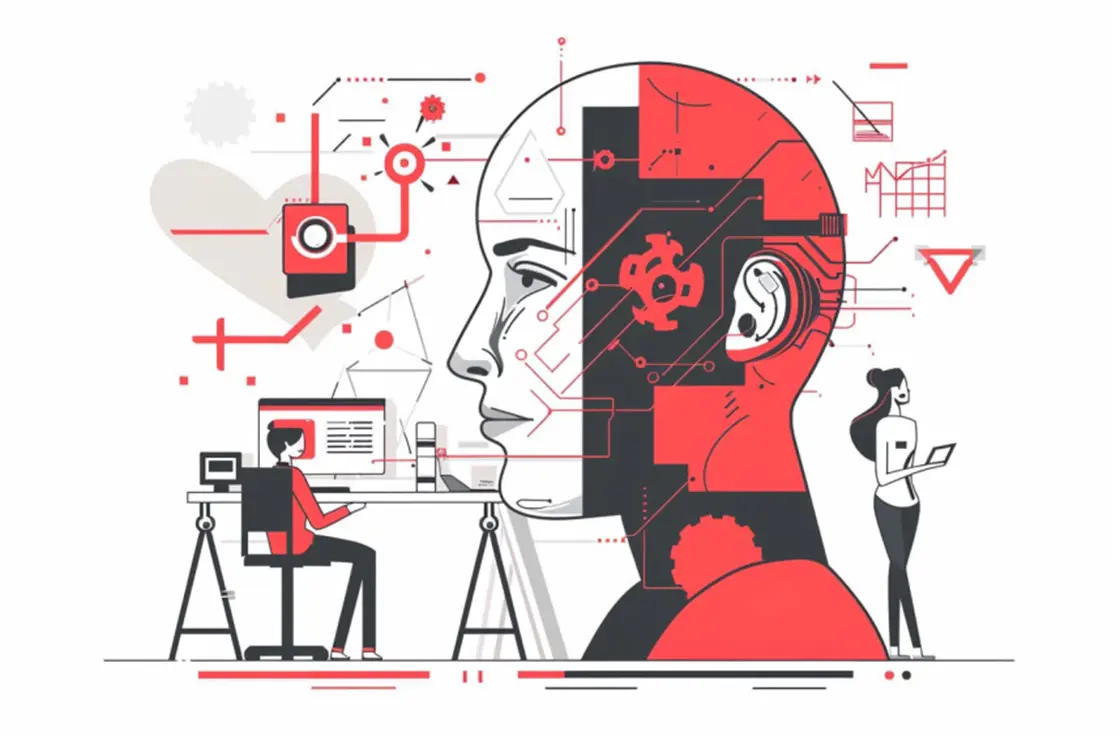
The relationship between AI and creativity is best understood as a collaboration. Rather than viewing AI as a threat, it should be seen as a powerful tool that complements and enhances designers’ abilities. AI can handle repetitive and technical tasks, freeing designers to focus on strategic and conceptual decisions. This collaboration enables designers to explore new ideas and push creative boundaries beyond what was previously possible.
Conclusion
In summary, the intersection of artificial intelligence and creativity is shaping a new paradigm in graphic design. While AI expands creative possibilities, it is human intuition and judgment that give design its meaning and purpose. The collaboration between AI and designers points toward a future where technology and human creativity work together to produce more innovative and impactful visual work.