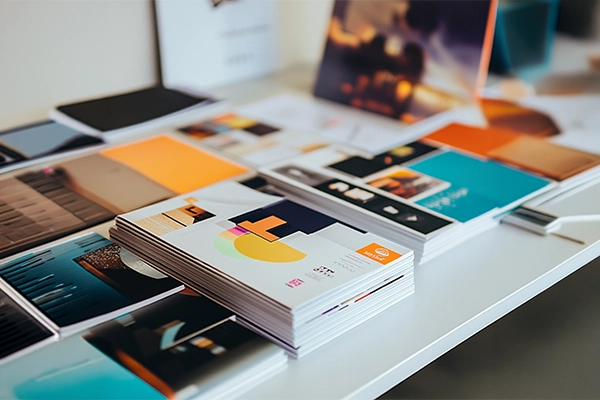
Editorial design didn’t die—it evolved
Many entrepreneurs associate editorial design solely with print magazines, catalogs, or physical books.
They believe that in the digital age, everything boils down to quick posts, social media, and ephemeral content.
But editorial design didn’t disappear. It transformed.
Today, editorial design is a strategic tool for companies that want to communicate with depth, authority, and structure.
It’s not just about printing. It’s about organizing information in a clear, hierarchical, and persuasive way.
And that’s more necessary than ever.
What is editorial design, really?
Editorial design is the discipline that organizes large volumes of information in a structured, readable, and visually coherent way.
It includes:
Typographic hierarchy.
Content organization.
Use of columns.
Spacing.
Visual rhythm.
Balance between text and image.
Narrative structure.
It is not decoration.
It is visual architecture applied to content.
Editorial design in today’s digital landscape
Although its origins lie in print media, today editorial design is found in:
Corporate blogs.
White papers.
E-books.
Sales brochures.
Business presentations.
Annual reports.
Case studies.
Extensive landing pages.
Portfolios.
Digital catalogs.
Newsletters.
Any format that needs to convey complex information requires editorial design.
The problem with unstructured business communication
Many companies produce valuable content… but present it poorly.
Common mistakes:
Long blocks of text with no hierarchy.
Lack of subheadings.
Poorly combined fonts.
Insufficient spacing.
Visual clutter.
Poor readability.
Disjointed narrative.
Disorganized information.
The result is simple:
The user leaves.
The information may be good, but if it isn’t presented strategically, it loses its impact.
Editorial design and perception of authority
A company that communicates with structure conveys:
Professionalism.
Clarity.
Mastery of the subject.
Order.
Trust.
Editorial design turns content into positioning.
A well-designed report can elevate brand perception more than a hundred superficial posts.
The importance of visual hierarchy
One of the pillars of editorial design is hierarchy.
Hierarchy means:
What is read first.
What stands out.
What is secondary.
What is supporting.
Without hierarchy, the user doesn’t know where to start.
And when there’s no guidance, users abandon the page.
In digital environments, where attention is limited, hierarchy is key to retention.
Typography as a strategic tool
Typographic choices in editorial design are not arbitrary aesthetics.
Typography:
Defines personality.
Influences readability.
Sets the pace.
Reinforces positioning.
A company that wants to project professionalism should not use informal fonts indiscriminately.
Typographic consistency is part of visual identity.
Editorial design and conversion
Editorial design also impacts sales.
For example:
On a long landing page:
A well-structured design guides users toward the CTA.
A cluttered design scatters attention.
In a sales presentation:
A clear presentation facilitates decision-making.
An overloaded document raises doubts.
In a case study:
A well-structured narrative reinforces credibility.
Plain text reduces impact.
Visual structure influences the decision.
Editorial design as a differentiator
In an environment saturated with fast-paced content, editorial design adds depth.
Brands that invest in:
Well-designed white papers.
Strategic reports.
Structured case studies.
E-books with real value.
Position themselves as industry leaders.
Not all companies are willing to communicate at that level.
That is where the competitive advantage lies.
Editorial design and branding
Editorial design must integrate with the visual identity.
It must adhere to:
Corporate color palette.
Official typefaces.
Graphic style.
Visual tone.
If the editorial design looks different from the rest of the brand, consistency is lost.
Consistency builds authority.
Common mistakes made by companies
Using generic templates without customization.
Prioritizing aesthetics over readability.
Failing to adapt the design for mobile.
Overloading the page with unnecessary graphics.
Ignoring margins.
Failing to consider visual rhythm.
Failing to check contrast.
Failing to optimize PDFs for digital reading.
Details matter.
Editorial Design in Content Strategy
If you have a corporate blog, editorial design is crucial.
A well-structured article:
Improves SEO.
Increases dwell time.
Reduces bounce rate.
Makes reading easier.
Strengthens authority.
Content can rank on Google.
But editorial design keeps the reader engaged.
Editorial Design and High-Value Clients
High-level clients evaluate how you present your information.
A well-structured document conveys:
Professionalism.
Judgment.
Organization.
Analytical ability.
A slapdash document conveys the opposite.
Editorial design shapes perception before any business conversation takes place.
How to apply editorial design in your company
Define a clear hierarchy in your content.
Establish corporate typefaces.
Use strategic subheadings.
Organize blocks of information.
Respect white space.
Simplify the design.
Integrate visual identity.
Optimize for digital reading.
It’s not about doing more.
It’s about structuring better.
Final thoughts for entrepreneurs and business owners
Editorial design is not an outdated discipline.
It is a modern positioning tool.
In the age of fast-paced information, those who communicate with structure stand out.
And in business, standing out means growing.
If you want your content to establish authority, you need more than just good ideas.
You need strategic visual structure.