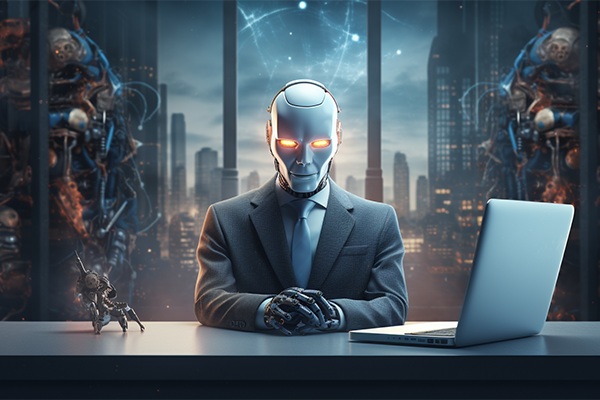
The future of graphic design is being significantly shaped by artificial intelligence (AI), which is set to transform how designers work and how visual content is created. As AI becomes more deeply integrated into design tools, it points toward a future full of exciting possibilities—where efficiency, personalization, and innovation are more accessible than ever.
Automation and Personalization
One of the most promising aspects of AI in graphic design is the automation of repetitive tasks. This allows designers to focus on more strategic and creative aspects of their work. For example, AI can automatically adapt designs for different formats and devices, optimize images and color schemes, and even generate personalized versions of a design for different audiences. This ability to deliver real-time personalization enables brands to create more relevant and engaging visual experiences.
New Forms of Collaboration
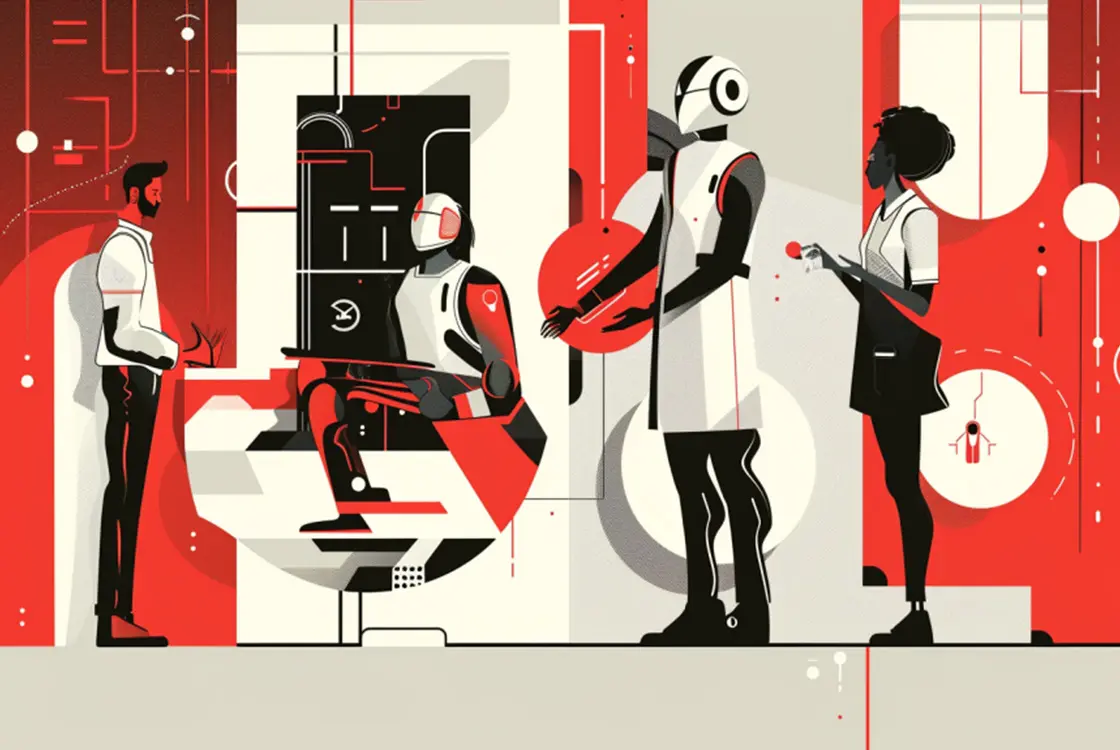
The future will also bring deeper collaboration between designers and machines. Rather than replacing designers, AI will act as a complementary tool that enhances their capabilities. Generative design systems, for instance, allow designers to explore multiple solutions quickly and efficiently—encouraging experimentation and innovation. This collaboration between humans and AI opens new creative pathways, enabling designers to explore ideas that were previously out of reach.
Ethical Challenges and Creativity
However, the future of AI in graphic design is not without challenges. As AI tools become more powerful, questions around authorship, originality, and intellectual property will continue to arise. Who is the true creator of a machine-generated design? There is also the risk that overreliance on AI could lead to design homogenization, where outputs become overly similar. To avoid this, designers must strike a balance between leveraging technology and preserving human creativity—ensuring that AI enhances originality rather than replacing it.
Impact on the Design Industry
AI will have a profound impact on the design industry. Companies will need to adapt to an environment where technology plays an increasingly central role. This involves not only adopting new tools but also investing in continuous learning so designers can fully leverage AI capabilities. The ability to innovate and adapt will be critical for success in an increasingly competitive market.
Conclusion
In conclusion, the future of graphic design with artificial intelligence is both exciting and full of opportunity. While challenges exist, AI has the potential to transform the industry—making it more efficient, creative, and personalized. Designers who embrace these technologies will be better positioned to lead the next era of graphic design.