A massive wave called artificial intelligence (AI) is redefining the creative landscape. But what does this mean for graphic designers—those wizards of color and form who bring our wildest visions to life? Is AI a springboard to future masterpieces, or a wave that threatens to sweep away the very essence of graphic design? Get ready for a journey through the impact of AI on graphic design and how to navigate these digital waters. Let’s weigh anchor and begin this adventure!
AI as a Creative Tool
The arrival of AI in the world of graphic design has been like discovering a new continent full of unexplored possibilities. AI tools can generate everything from logos to complex illustrations in seconds, based on parameters defined by the designer. The result? An accelerated workflow and an explosion of creativity where the only limit seems to be our imagination.
Pros:
• Improved efficiency: Automating repetitive tasks frees up time for creative exploration.
• Design innovation: AI can suggest combinations and perspectives we might not have considered, pushing the boundaries of our creativity.
Cons:
• Over-reliance: Ease of use could lead us to rely too heavily on technology, potentially limiting our skill development.
• Creative uniformity: With everyone using similar tools, do we run the risk of homogenizing graphic design?
The Graphic Designer as a Strategist
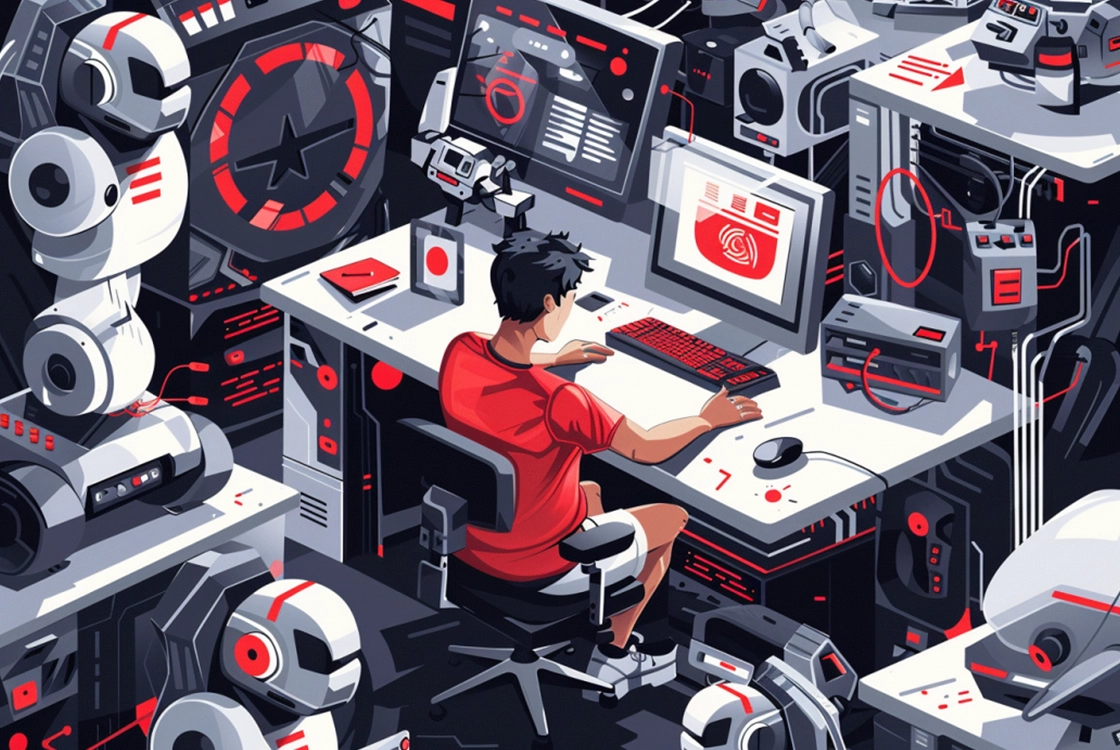
In this new era, the role of the graphic designer is evolving from simply being a creator of visual content to becoming a creative strategist. The ability to integrate AI tools into the design process, without losing one’s unique vision and emotional connection with the audience, becomes crucial. This involves not only mastering the technology but also deeply understanding human needs and how design can meet them.
Pros:
• Greater focus on strategy: Automation allows designers to concentrate on the conceptual and strategic aspects of design.
• More versatile roles: Designers have the opportunity to explore new roles, such as AI creative director, where they guide the technology to achieve creative goals.
Cons:
• Learning curve: Keeping up with the latest AI technologies can be overwhelming and require a significant investment of time and resources.
• Ethical and authorship challenges: Who owns the creation when AI is involved?
Navigating Toward the Future
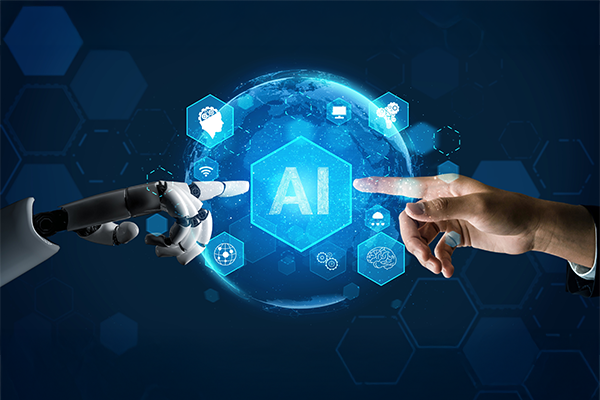
The key for graphic designers in the age of artificial intelligence is not to view technology as a threat, but as a partner on the creative journey. AI can be a powerful tool in the hands of those who know how to use it to amplify their artistic vision, not replace it.
Strategies for Success:
• Continuous Adaptation: Stay curious and open to learning new technologies and techniques.
• Collaboration with AI: Use AI as an extension of your creative process, allowing you to experiment and explore new directions.
• Human-centered approach: Remember that, ultimately, design is about connecting with people. Sensitivity, empathy, and cultural understanding are qualities that AI cannot yet replicate.
Co-creators of the future
On the horizon of graphic design, artificial intelligence emerges not as a rival, but as an ally offering new frontiers to explore. As we embark on this journey, let’s remember that a designer’s most powerful tool isn’t the most advanced software, but their ability to infuse humanity and meaning into their work.
So, whether you’re a graphic design veteran or an enthusiastic newcomer, I invite you to view the AI era not with fear, but with optimism and curiosity. Together, humans and machines, we can navigate toward a future where art and technology intertwine in a dance of unlimited possibilities.