
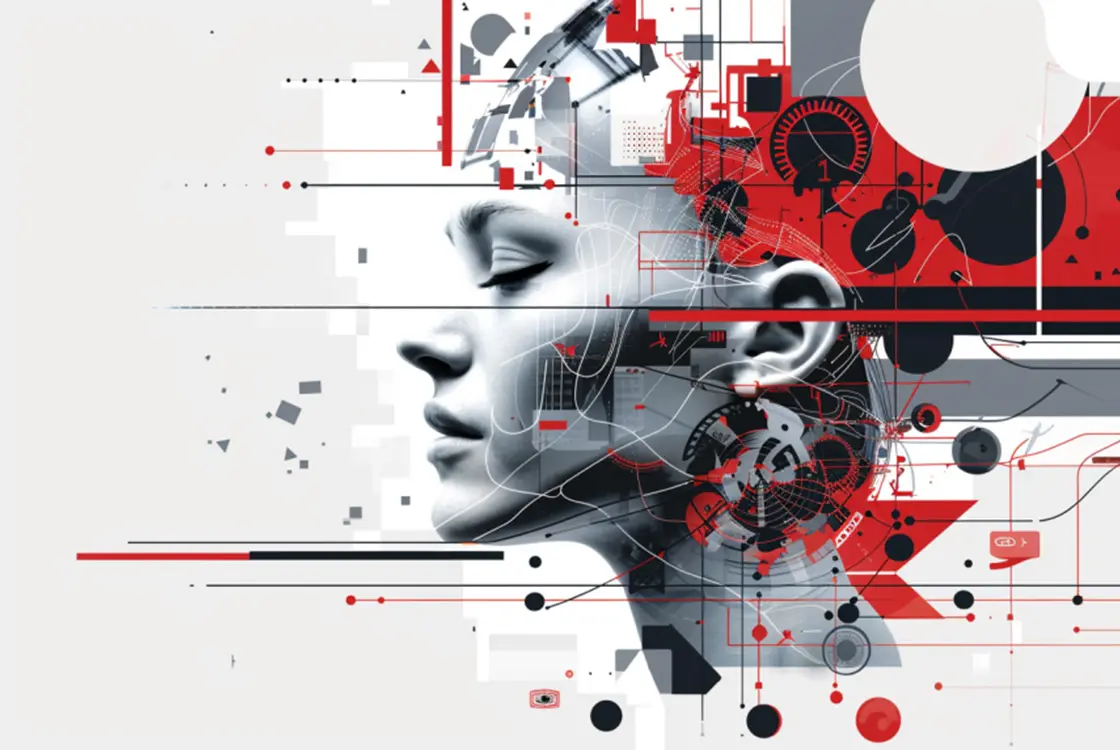
Artificial intelligence (AI) is transforming graphic design, but its growing adoption also brings significant ethical challenges. These issues affect not only designers, but also businesses and society as a whole. How these challenges are addressed will largely determine how AI integrates into the future of design.
Authorship and Originality
One of the main ethical concerns in AI-driven design is authorship and originality. As AI tools become more advanced, it becomes increasingly difficult to determine who the true creator of a piece is—the designer or the machine. This raises important questions around copyright and intellectual property. If a work is generated by an algorithm, who owns the rights? The designer who created the prompt or system? The company behind the tool? Or the end user? These are complex issues that still lack clear answers.
Bias in AI Algorithms
Another major ethical challenge is the presence of bias in AI algorithms. Since these systems are created and trained by humans, they can reflect and perpetuate existing prejudices. In graphic design, this may result in content that reinforces stereotypes or excludes certain groups. For example, an algorithm trained on non-diverse datasets may generate visuals that fail to represent people across different ethnicities, genders, or abilities. It is essential for designers and developers to recognize these biases and actively work to mitigate them.
The Risk of Dehumanizing Design
AI also raises concerns about the potential dehumanization of design. While AI can produce efficient and technically accurate results, it lacks the human intuition and creativity that often make design truly meaningful and impactful. There is a risk that, in the pursuit of efficiency and cost reduction, design becomes overly mechanical and standardized—losing its ability to innovate and emotionally connect with people.
Job Displacement
The increasing use of AI in design also brings concerns about job displacement. As AI tools become more accessible and powerful, many tasks that once required human designers may be automated. This could lead to reduced demand for certain design roles, particularly in areas such as logo creation, image editing, and web design. It is crucial for the industry to address this proactively by providing training and reskilling opportunities for affected professionals.
Conclusion
While artificial intelligence offers many advantages for graphic design, it also introduces significant ethical challenges that must be carefully addressed. The design industry must take a responsible approach—ensuring that creativity, fairness, and human perspective remain at the core of the discipline.


