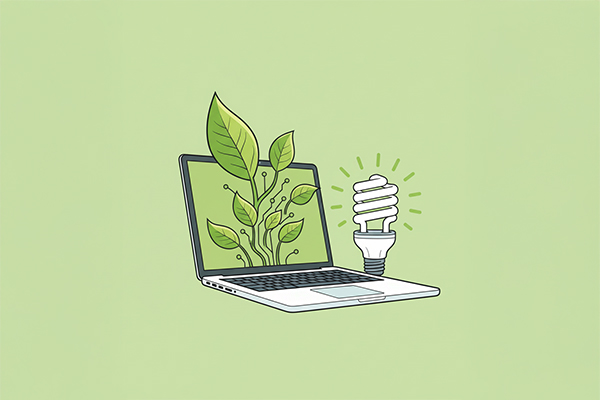
Web design is no longer just about creating visually appealing and functional sites—it’s also about building experiences that are environmentally responsible. In a world increasingly aware of sustainability, sustainable web design practices are not only ethical but also improve performance, loading speed, and user experience (UX).
In this article, we explore how to apply energy-efficient principles to web design, ensuring your site is not only fast and effective but also environmentally responsible and future-ready.
What is sustainable web design?
Sustainable web design refers to creating websites that minimize environmental impact by reducing energy consumption during operation.
This approach focuses on:
- Reducing energy usage from servers and user devices
- Optimizing loading speed across all devices
- Improving UX through faster, more efficient navigation
It’s not just about aesthetics—it’s about designing with intention and efficiency.
Why energy efficiency matters in web design
1. The environmental impact of technology
Every time a user loads a website, energy is consumed—by servers, networks, and devices.
As digital carbon footprints become more relevant, reducing energy usage means:
- Lower CO₂ emissions
- Better performance
- More efficient user experiences
2. Faster load times = lower energy consumption
Slow websites don’t just frustrate users—they waste energy.
- Longer load times = higher server usage
- More waiting time = more energy consumed on user devices
- Higher bounce rates = worse UX
A faster website is not just better—it’s more sustainable.
Key practices for sustainable web design
1. Optimize images and media
Images are often the heaviest assets on a website.
Best practices:
- Compress images without losing quality
- Use modern formats like WebP
- Implement lazy loading
2. Minify your code
Unnecessary code increases page weight and energy usage.
- Minify HTML, CSS, and JavaScript
- Remove unused scripts
- Combine files to reduce server requests
3. Use green hosting
Your hosting provider matters.
- Choose servers powered by renewable energy
- Use optimized infrastructure to reduce energy consumption
4. Design mobile-first (for real)
Mobile devices are often less powerful and more sensitive to inefficiencies.
- Simplify layouts
- Avoid heavy animations
- Optimize speed for slower connections
How to measure your website’s impact
Use tools to evaluate performance and sustainability:
- Website Carbon Calculator
- PageSpeed Insights
- GTmetrix
These help you identify inefficiencies and improve both speed and energy usage.
Conclusion
Sustainable web design isn’t a trend—it’s a responsibility.
Every line of code, every image, every second of load time has an impact—not just on users, but on the planet.
A well-designed website today must be:
- Fast
- Efficient
- Responsible
At Esbozo, we believe great design goes beyond the screen. It performs better, consumes less, and respects more.
Because digital design should also be part of the solution.