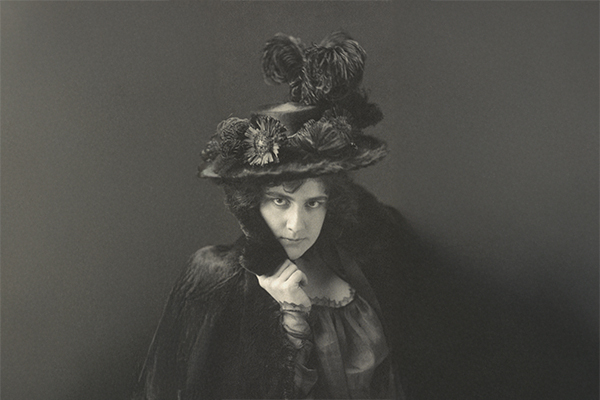
Ethel Reed was one of the most innovative and bold graphic designers of her time, making a significant impact on design at the end of the 19th century. Her distinctive style and emotional approach to poster design positioned her as a pioneer in American graphic design, breaking gender barriers in a male-dominated industry.
In this article, we explore her life, legacy, and contributions to design—analyzing her visual language and why her work remains relevant today.
Who was Ethel Reed?
Ethel Reed was born in 1874 in Boston, Massachusetts, and became one of the first women to gain recognition in graphic design.
She stood out early for her ability to merge art and typography in a unique way. Unlike many designers of her time, Reed focused on creating emotionally engaging work—pieces that were not only commercially effective but also visually striking.
Her work represented a seamless fusion of illustration and typography, placing her among the most important figures of the Art Nouveau movement in the United States.
Her visual style: between classic and modern
Ethel Reed’s work blended tradition with innovation. Her designs featured:
- Flowing lines
- Decorative typography
- Rich, vibrant color palettes
This combination made her work both artistic and commercially effective.
1. Innovative use of typography
Reed understood early on that typography wasn’t just functional—it was expressive.
- Decorative type: She created custom letterforms that integrated seamlessly with illustrations
- Typographic composition: She played with spacing, hierarchy, and contrast using roman and cursive styles
Her approach transformed typography into a central storytelling element.
2. Influence of Art Nouveau
Reed’s work was deeply influenced by Art Nouveau, characterized by:
- Organic shapes and curves
- Floral and natural motifs
- Decorative visual flow
Her posters often blended typography and illustration into unified compositions, creating a sense of movement and harmony.
Breaking barriers: her legacy in design
At a time when graphic design was dominated by men, Ethel Reed challenged expectations and redefined what was possible.
1. Exceeding the expectations of her era
Reed went beyond the limited roles typically assigned to women in art.
She established herself as a commercial designer with artistic recognition, contributing to the evolution of modern advertising design.
Her posters didn’t just attract attention—they influenced action.
2. Transforming poster design
Her work broke away from traditional design conventions.
- She merged modern aesthetics with commercial purpose
- She created posters for theater, music, and cultural events
- She captured the emotional and artistic spirit of her time
Ethel Reed’s influence on contemporary design
Although she passed away in 1912, her influence continues to shape modern design.
1. Relevance in the digital era
Today, designers still draw inspiration from her work—especially in:
- Typography experimentation
- Poster design
- Organic visual systems
2. Bridging art and commerce
Reed’s legacy proves that design can be both:
- Artistically expressive
- Commercially effective
Her work shows that these two worlds are not opposites—but complements.
Conclusion
Ethel Reed was a defining figure in the evolution of modern graphic design.
She broke gender barriers, challenged conventions, and reimagined how visual communication could function in both art and commerce.
Her posters were more than designs—they were statements.
At Esbozo, we see her work as a reminder:
Great design doesn’t just communicate.
It transforms perception.