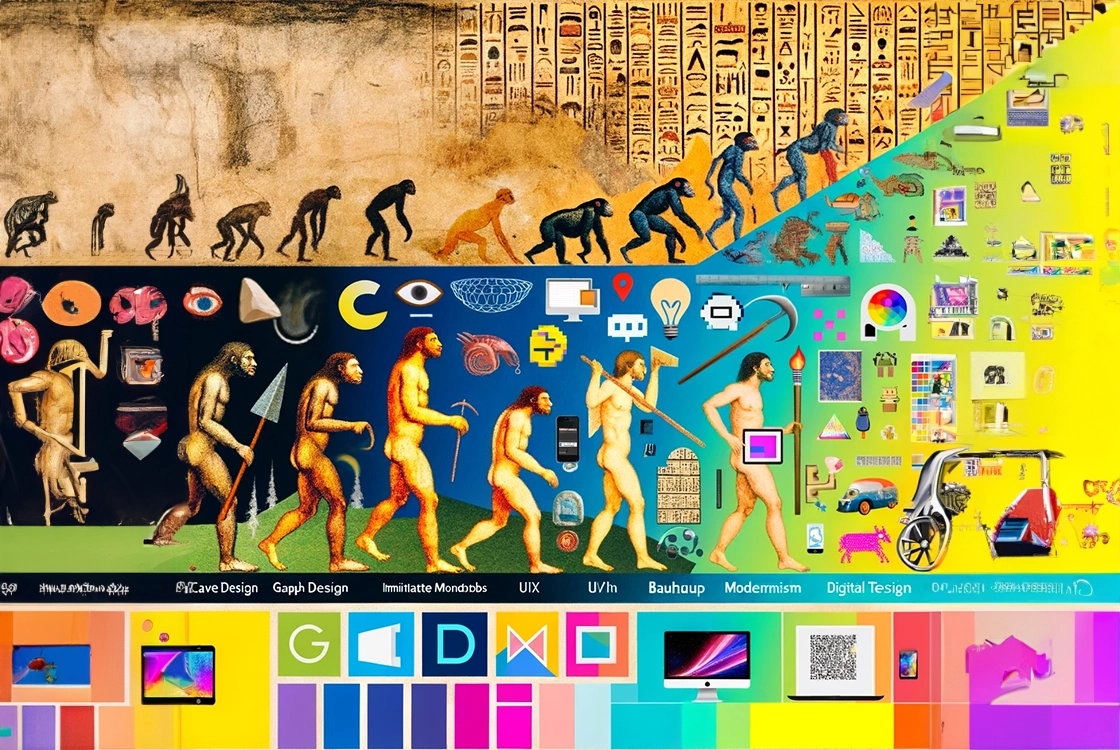
Welcome, curious minds and art enthusiasts! Today we’re hopping aboard a creative time machine to explore the fascinating history of graphic design. From ancient hieroglyphs to the digital revolution, graphic design has been a powerful force in human communication and artistic expression. So buckle up, because this journey through time and creativity promises to be anything but boring.
The Dawn of Visual Communication
Our journey begins in ancient caves, where early humans captured their stories and dreams on rocky walls. We fast-forward to Egypt, where hieroglyphs were not only a form of writing but also a complex visual art. These ancient designers understood something fundamental: a picture is worth a thousand words.
The Middle Ages and the Birth of Typography
We jump to the Middle Ages, an era of illuminated manuscripts and the dawn of typography. Monks, in their scriptoria, were the graphic designers of the time, meticulously decorating religious books with ornaments and colorful letters. Gutenberg’s invention of the printing press in the 15th century was the first revolutionary “design software,” democratizing knowledge and setting the stage for the future of graphic design.
The Industrial Revolution and the Rise of Advertising
As the clock of history ticks forward, we arrive at the Industrial Revolution, a turning point for graphic design. Mass production required mass advertising, and thus posters, brochures, and catalogs were born. Designers began experimenting with typefaces, colors, and printing techniques, creating masterpieces that not only sold products but were also works of art.
Modernism and the Quest for Simplicity
The 20th century brought modernism, an era where “less is more” became the mantra of design. The Bauhaus, with its focus on functionality and simplicity, left an indelible mark on graphic design, teaching us that design must serve a purpose, not just be aesthetically pleasing. This era also saw the birth of corporate identity and branding, with companies recognizing the power of design to create emotional connections with their customers.
The Digital Age and the Future of Graphic Design
Finally, we have arrived in the digital age, where creative possibilities are as vast as cyberspace itself. The digital revolution has transformed graphic design, with tools like Photoshop and Illustrator enabling designers to push their creativity to new limits. Web design, user interface (UI), and user experience (UX) are the new frontiers, proving that graphic design remains essential in our daily interaction with the digital world.
An Endless Canvas
The history of graphic design is a testament to human ingenuity and creativity. From cave walls to liquid crystal displays, graphic design has played a crucial role in how we see and understand the world. And as we look toward the future, one thing is certain: the history of graphic design continues to be written every day, with every click, every color, and every line. So, who knows what wonders await us in the next chapter of this incredible creative adventure?
Thank you for joining me on this journey through time and creativity! I hope it has inspired you to see graphic design in a new light and to appreciate the stories behind the images that shape our world. Until next time, time travelers!