When design ceased to be merely functional and became desirable
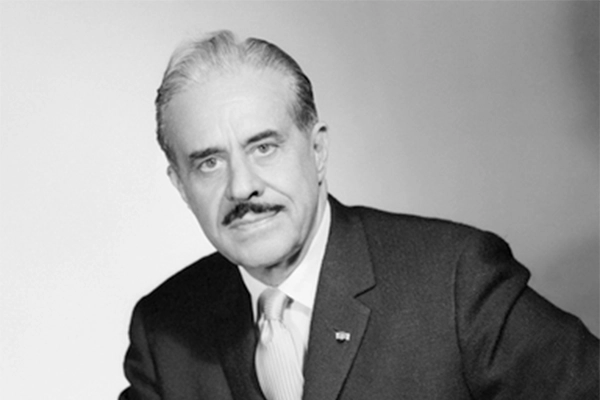
Before branding was understood as an experience, before design became fully integrated into marketing, Raymond Loewy had already grasped a fundamental truth:
People don’t buy just out of necessity.
They buy out of desire.
Loewy was a pioneer in demonstrating that design should not be limited to being functional.
It had to be attractive.
Memorable.
Seductive.
His philosophy transformed industrial design, packaging, visual identity, and the commercial perception of products around the world.
And his lesson remains key for any entrepreneur today.
The Context: The Era of Mass Production
In the mid-20th century, factories were producing more and more products.
But there was a problem:
Many were functional, but unattractive.
Loewy understood that, in an environment where multiple products serve the same function, design becomes a competitive differentiator.
It’s not just about utility.
It’s about preference.
And preference drives sales.
The MAYA Principle: The Most Advanced Yet Acceptable
One of Loewy’s most powerful ideas was his MAYA principle:
Most Advanced Yet Acceptable.
In other words:
As advanced as possible, yet still acceptable to the public.
This means that design should not be:
So innovative that it provokes rejection.
Nor so conservative that it goes unnoticed.
It must strike the perfect balance between novelty and familiarity.
For today’s businesses, this lesson is crucial:
Differentiation must be strategic, not radical without context.
Design as a positioning tool
Loewy did not view design as decoration.
He saw it as a business tool.
He understood that:
Form communicates.
Aesthetics influence perception.
Presentation impacts perceived value.
Visual appeal reduces purchase friction.
In competitive markets, design can be the reason a customer chooses one brand over another.
Design creates desire, not just recognition
A logo can help people identify you.
But strategic design can make them choose you.
Loewy helped many brands understand that aesthetics influence:
Trust.
Modernity.
Innovation.
Perceived quality.
Accepted price.
Associated status.
When design conveys prestige, the price is more easily justified.
Practical application for entrepreneurs
Many businesses focus exclusively on:
Functionality.
Technical features.
Internal processes.
Rational arguments.
But they forget that the customer also evaluates:
Aesthetics.
Presentation.
Visual experience.
Graphic consistency.
Interface design.
Packaging.
Digital image.
If your design doesn’t generate desire, the sales process becomes more difficult.
Design and Perceived Value
In corporate branding, design directly influences perceived value.
A well-presented product or service:
Appears more professional.
Appears more structured.
Appears more trustworthy.
Appears to be of higher quality.
Can command higher prices.
Perception precedes rational evaluation.
Loewy and Aesthetic Consistency
Although innovative, Loewy maintained consistency in his systems.
He did not design isolated pieces.
He worked on the complete experience.
Today, this translates to:
Consistent visual identity.
Coherent web design.
Aligned social media.
Structured presentations.
Clear graphic communication.
Fragmented design weakens the brand.
Coherent design strengthens positioning.
Differentiation through appeal
In saturated markets, many competitors offer:
The same thing.
At similar prices.
With similar selling points.
Design can become the deciding factor.
Not because the customer consciously analyzes it.
But because they intuitively perceive it.
Aesthetics influence the choice.
The Importance of Design in Today’s Digital Environments
Today, the first point of contact with your brand occurs on:
Instagram.
LinkedIn.
Website.
Email.
Digital advertising.
In a matter of seconds, the user decides whether your company:
Looks professional.
Looks unprofessional.
Looks modern.
Looks trustworthy.
That initial judgment is heavily influenced by design.
What business owners can learn
Design isn’t an expense; it’s a strategic investment.
Aesthetics influence price perception.
Desire accelerates decisions.
Innovation must be acceptable.
Visual consistency strengthens authority.
Presentation influences conversion.
Ignoring design is ignoring a powerful business lever.
Design and business growth
Brands that understand the value of design:
Position themselves faster.
Better justify their prices.
Generate greater brand recall.
Reduce commercial friction.
Build a strong identity.
Attract customers aligned with their level.
Design doesn’t just accompany growth.
It can drive it.
Final thoughts for entrepreneurs and business owners
Raymond Loewy understood something that remains true today:
People don’t just buy what they need.
They buy what they desire.
If your brand wants to grow in a competitive market, it needs more than just functionality.
It needs strategic appeal.
Because when design sparks desire, selling stops being a struggle and becomes a natural choice.