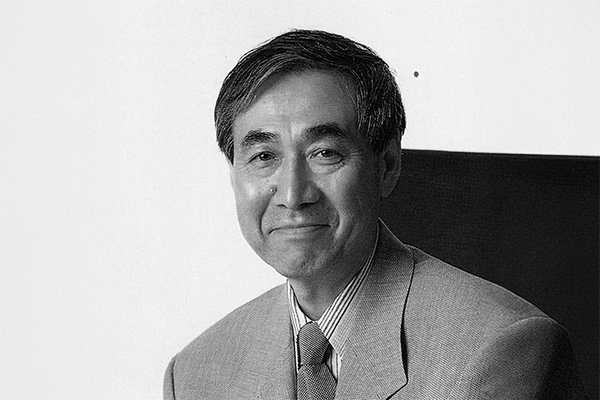
Shigeo Fukuda was a Japanese graphic designer and sculptor who transformed the landscape of 20th-century design with a unique style—minimalist, clever, and deeply message-driven. Born in Tokyo in 1932 and trained at the Tokyo University of the Arts, Fukuda not only mastered traditional graphic techniques but reimagined them to speak directly to the viewer’s subconscious.
His legacy proves that design can be more than visually striking—it can be a powerful tool for social critique and the promotion of universal values.
Fukuda’s style is defined by optical illusions, perspective play, and a visual economy that communicates more with less. His work challenges perception, encouraging viewers to look twice and uncover hidden meanings or visual paradoxes.
This approach became his signature and a vehicle for addressing themes such as war, the environment, and consumerism. Through his work, Fukuda turned design into an intellectual, emotional, and social experience.
One of his most iconic posters, Victory 1945, became an international symbol of pacifism. The image transforms a cannon shell into a flower—a powerful visual metaphor that condemns war and promotes hope.
Like many of his works, it communicates a universal message with striking simplicity. Fukuda’s designs spoke to collective consciousness without the need for words, breaking linguistic and cultural barriers.
His talent received global recognition. He exhibited internationally and became the first Japanese designer inducted into the Art Directors Club Hall of Fame in New York. His work was also showcased at institutions such as MoMA and major design biennials, solidifying his role as a pioneer of socially conscious design.
In Japan, he was equally celebrated for blending tradition and modernity—combining Japanese aesthetics with forward-thinking Western concepts.
Fukuda also explored three-dimensional art, creating kinetic sculptures and structures that played with spatial perception. Like his graphic work, these pieces carried deeper messages: challenging how we see, think, and interpret the world around us.
His work consistently aimed to provoke reflection and reshape how we interact with images and environments.
At the core of Fukuda’s philosophy was the belief that design must have purpose. For him, designers carried ethical and social responsibility. He rejected empty aesthetics, striving instead to create impact, spark critical thinking, and contribute to a more conscious and equitable world.
His approach inspired generations of creatives to use design not just for commercial purposes, but as a tool to communicate, raise awareness, and drive change.
Shigeo Fukuda passed away in 2009, but his legacy lives on in every designer who embraces minimalism as a way to say more with less.
In a world saturated with visual noise, his work reminds us that the most powerful design creates space for silence and reflection. Fukuda proved that design can be art—and art can be awareness.
His story invites us to look beyond the surface and rediscover design as a tool for transformation. Through his posters, sculptures, and philosophy, Fukuda didn’t just leave a mark on graphic design history—he left an impact on those who believe that a well-communicated message can change the world