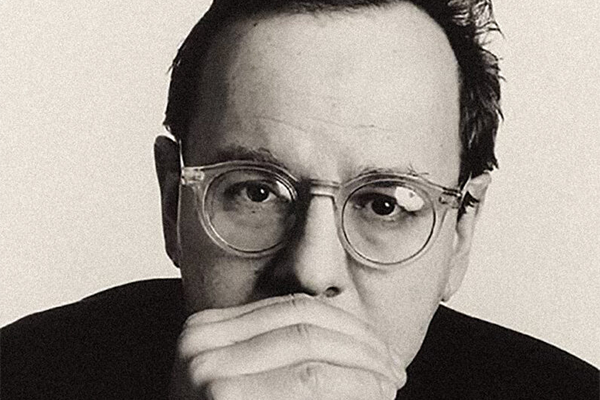
Tibor Kalman was one of the most influential—and provocative—designers of the 20th century. Born in Hungary in 1949 and later emigrating to the United States, Kalman challenged traditional graphic design norms from the very beginning. His approach was radical, critical, and deeply activist. He rejected the idea of design as mere decoration, arguing that without ethical or political intent, design was empty.
For Kalman, design wasn’t about making things look good—it was about making people think.
Redefining design with M&Co
In the 1980s, Kalman founded the influential New York-based studio M&Co, where he reimagined editorial and identity design through bold aesthetics, conceptual depth, and sharp humor.
The studio worked with clients such as:
- Talking Heads
- David Byrne
- Esquire
Their work blended art, irony, and social commentary—often pushing boundaries in ways that were unusual for commercial design at the time.
Colors: design with a global voice
Kalman’s most impactful work came with Colors, the magazine he co-founded in 1991 with Oliviero Toscani for Benetton.
As editor until 1995, Kalman transformed Colors into a visually striking platform that tackled global issues such as:
- Racism
- Poverty
- Migration
- HIV/AIDS
- War
The magazine stood out for its provocative imagery and unconventional editorial design. Kalman wasn’t afraid to make people uncomfortable—because discomfort, for him, was a catalyst for awareness.
A designer with a point of view
Kalman believed that neutrality in design was a myth. As he famously said:
“People who say design has nothing to do with politics are lying.”
This mindset positioned him as both admired and controversial—but undeniably influential. His work constantly challenged the relationship between:
- Aesthetics and ethics
- Function and message
- Beauty and truth
Legacy and influence
Tibor Kalman passed away in 1999 due to lymphoma, but his impact continues to resonate. More than a body of work, he left behind a way of thinking about design:
Design as a tool for questioning.
Design as a tool for disruption.
Design as a tool for change.
In an industry often driven by trends and approval, Kalman remains a reference point for designers who believe their work should stand for something.
Conclusion
Tibor Kalman didn’t design to please—
he designed to provoke.
His legacy challenges every designer to ask a fundamental question:
What are you really creating for—and who are you creating it for?
Because when design takes a stance, it stops being decoration
and becomes impact.