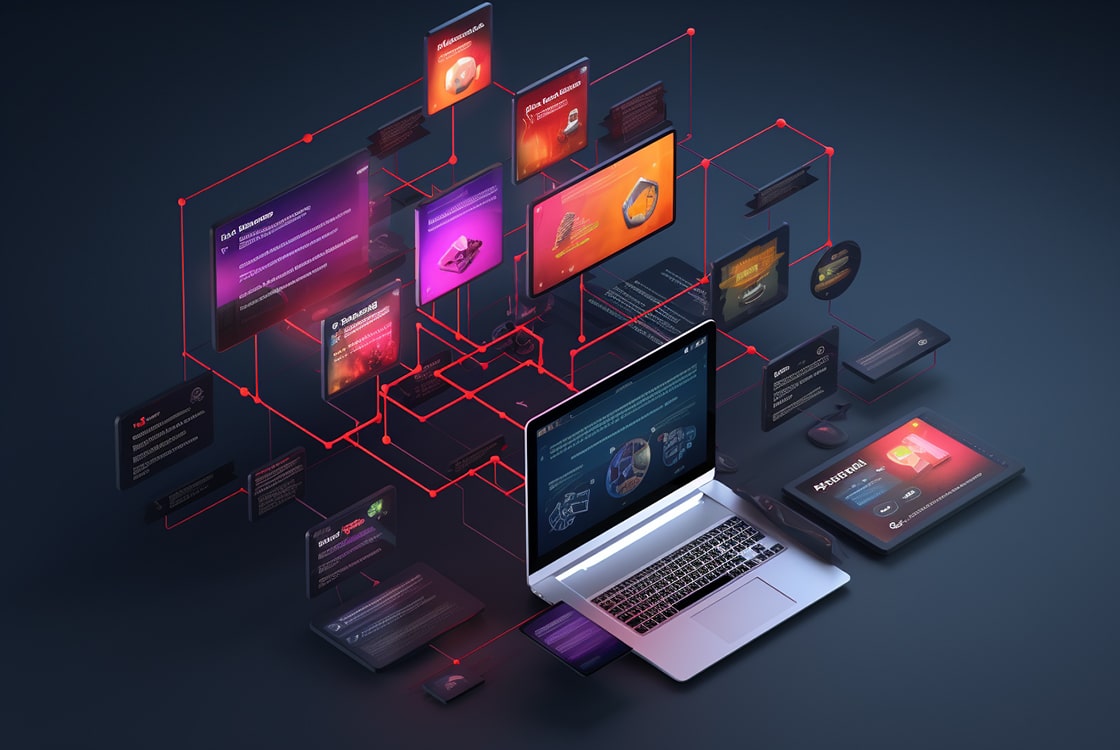
Web design is a constantly evolving field where creativity and functionality come together to create engaging and effective online experiences. Over the years, various web page designs have emerged and become popular trends due to their ability to captivate users and convey messages clearly and memorably. In this article, we’ll explore some of the most widely used web page designs today and how they influence online interaction.
Grid Layout
Grid layout organizes content into an orderly, symmetrical grid structure. Each element—whether an image, a block of text, or a link—is placed in a grid cell, creating an organized and harmonious appearance. This approach is especially useful for websites with a large amount of content, such as online stores and blogs, as it facilitates the orderly presentation of information and products.
Card Design
Card design has become popular thanks to the influence of social media and mobile apps. Cards are self-contained blocks of content arranged in a grid. Each card contains standalone information, such as an image, a title, and a brief description. This design is highly interactive and allows users to explore different pieces of content intuitively. News websites, visual content platforms, and social media sites often adopt this approach.
Parallax Scrolling Design
Parallax scrolling design creates a visual effect in which foreground and background elements move at different speeds as the user scrolls through the page. This adds depth and dynamism to the design, which can be particularly effective for storytelling or presenting products in an engaging way. Websites for fashion brands, creative agencies, and high-end products often use parallax scrolling to create an immersive experience. Web design is a constantly evolving field that reflects changing trends and the needs of online users. The web designs mentioned above are just a sample of the diverse options available for creating engaging and effective digital experiences. Whether through minimalist design, card-based layouts, or the visual storytelling of parallax scrolling, each approach has its own impact on how we interact with online content and how brands effectively convey their message.