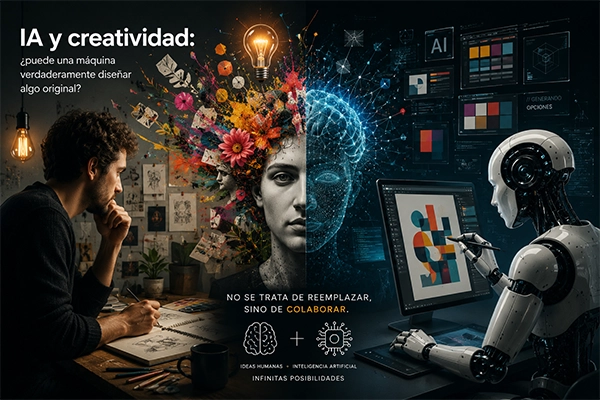
Artificial intelligence (AI) has revolutionized graphic design, enabling faster and more efficient visual content creation. From automating repetitive tasks to generating personalized designs, AI allows designers to focus on creativity while optimizing workflows.
1. Automated Generation of Personalized Designs
Tools like Canva AI and Adobe Sensei enable users to create designs in seconds, based on usage patterns and visual preferences. These platforms suggest templates, color schemes, and layouts, saving time while ensuring visual consistency.
Benefits:
- Time-saving in graphic production
- Data-driven personalization based on trends
2. Image and Visual Content Optimization
AI has significantly improved image quality through tools like Luminar AI and Photoshop AI, which automatically adjust lighting, color, and sharpness. These solutions enhance visuals without requiring advanced technical skills.
Key applications:
- Automatic background removal
- One-click image enhancement
- Intelligent facial retouching
3. Predictive Design and Creative Suggestions
Platforms like Looka and Fotor use AI to recommend color palettes, typography, and visual styles tailored to user needs. This simplifies decision-making and helps maintain a consistent brand identity.
Advantages:
- Suggestions based on current design trends
- Visual options tailored to each brand
4. AI-Generated Art and Creative Content
AI models such as DALL·E and MidJourney allow designers to generate unique illustrations from text prompts. This opens up new creative possibilities without starting from scratch.
Common uses:
- Creating graphics for branding
- Exploring innovative visual concepts
Conclusion
AI has transformed modern graphic design by automating processes, enhancing visual quality, and expanding creative possibilities. Its application allows designers to optimize workflows and focus on innovation.