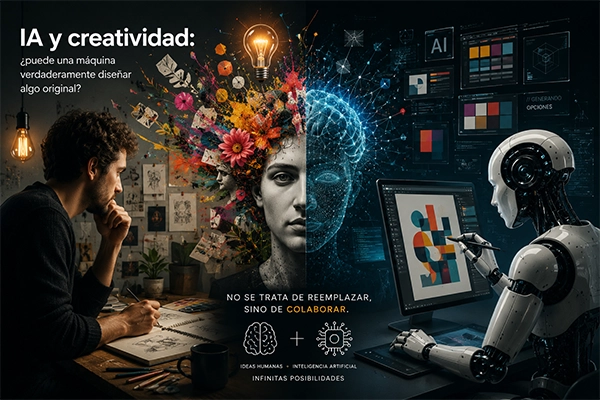
The rise of artificial intelligence in design raises a critical question: how far is it ethical to delegate creative processes to machines? This goes beyond technology—it touches on moral, cultural, economic, and artistic dimensions. In this article, we explore the ethical dilemmas behind automation in design and the need for a clear framework.
Automating the repetitive vs. the creative
Automating mechanical tasks is completely valid: resizing assets, generating variations, organizing files. But when AI starts making aesthetic or conceptual decisions without human input, the line between efficiency and dehumanization becomes blurred.
Key ethical dilemmas
1. Authorship and intellectual property
Who owns an AI-generated design? The person writing the prompt, the machine, or the developer? Current legal frameworks still lack clear answers.
2. Transparency in AI usage
Brands should be transparent about when and how AI is used. Hiding it can erode user trust.
3. Impact on jobs
Automation may replace junior roles or entry-level tasks that once served as gateways into the profession. Balancing efficiency and employment is critical.
4. Cultural homogenization
AI models trained on global datasets can lead to standardized visuals, reducing cultural diversity and local identity.
5. Responsibility for outcomes
If AI-generated content includes bias, stereotypes, or offensive elements—who is accountable?
Principles for ethical AI in design
- Continuous human oversight
- Transparency in processes
- Respect for cultural and creative diversity
- Responsible use of training data
- Positioning designers as curators, not operators
Conclusion
Artificial intelligence is a powerful tool—but it is not neutral.
Automating creativity without a clear ethical framework risks weakening design and stripping it of its human essence. Designers must lead this conversation to ensure that technology enhances—not replaces—human expression.