In a visually saturated environment, what makes one post stand out among thousands?
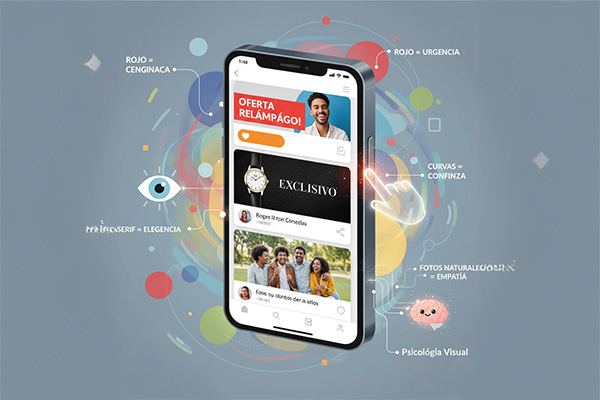
The answer lies in understanding visual psychology—how graphic elements, colors, shapes, and compositions influence emotions and behavior.
Visual psychology is about how people perceive and respond to visual stimuli. In social media, this directly impacts engagement—from likes to conversions.
This article breaks down how to apply visual psychology principles to capture attention, trigger emotion, and drive interaction.
What is visual psychology?
Visual psychology studies how humans perceive, process, and react to images.
In marketing and social media, it helps you create content that doesn’t just look good—but moves people to act:
like, comment, share, click, or buy.
1. Color: emotion in milliseconds
Color isn’t decoration. It’s a trigger.
Different colors generate different emotional responses:
- Red → urgency, energy, action
- Blue → trust, calm, reliability
- Yellow → attention, optimism, alertness
- Green → balance, health, nature
- Orange → creativity, accessibility, warmth
- Black → sophistication, luxury, authority
💡 Esbozo take: If your color doesn’t match your message, you’re creating friction, not impact.
2. Shapes: silent communication
Shapes speak before words.
- Straight/angular shapes → structure, stability, control
- Curves and circles → warmth, friendliness, approachability
- Irregular forms → creativity, disruption, innovation
Your shapes should reinforce your brand personality—not contradict it.
3. Contrast & hierarchy: directing attention
People don’t read. They scan.
Contrast and hierarchy decide what gets seen first.
Contrast
- High contrast → grabs attention instantly
- Low contrast → softer, calmer perception
Hierarchy
- Bigger = more important
- Brighter = more visible
- Positioned higher = seen first
If everything stands out, nothing does.
4. Typography: tone without sound
Type isn’t neutral. It communicates attitude.
- Sans-serif → modern, clean, accessible
- Serif → traditional, trustworthy, authoritative
- Script → expressive, elegant, personal
💡 Your font choice should answer this:
How should this message feel?
5. Imagery: emotional shortcuts
Images don’t explain. They trigger.
- Natural photography → authenticity, trust
- Stylized imagery → aspiration, luxury
- Diverse representation → connection, relevance
If people don’t see themselves in your content, they scroll past it.
Conclusion
Visual psychology isn’t theory. It’s leverage.
When you understand how people feel before they think, you design content that:
- stops the scroll
- holds attention
- drives action
At Esbozo, we don’t design to decorate.
We design to influence perception.
Because in social media, what wins isn’t what looks better…
it’s what hits first.