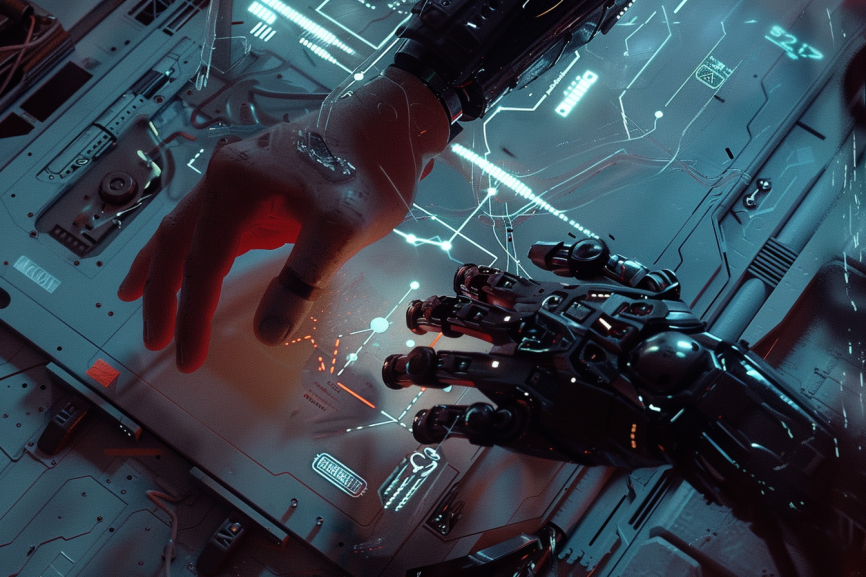
The advancement of artificial intelligence (AI) in graphic design is not about replacing creative professionals—it’s about enhancing them. The relationship between humans and machines is evolving into a strategic collaboration where technology amplifies human creativity, streamlines processes, and drives innovation.
1. AI as a support tool, not a replacement
AI has proven to be a powerful ally in automating repetitive tasks, allowing designers to focus on more strategic and conceptual aspects of the creative process.
Key benefits:
- Automation of routine tasks such as image cropping and color adjustments
- Reduced production time, enabling greater focus on concept development
- Increased efficiency in content personalization and adaptation across formats
Example: Tools like Adobe Sensei can perform automatic image retouching, freeing designers to focus on creative direction.
2. Co-creation: machines as a source of inspiration
AI-powered tools like MidJourney and Runway AI can generate visual ideas that inspire designers, acting as a starting point for creativity. These platforms provide outputs that can be refined and elevated through human judgment, fostering a collaborative creation process.
Advantages of AI co-creation:
- Rapid exploration of multiple visual styles and concepts
- Generation of new ideas based on learned patterns
- Ability to experiment with emerging visual trends without starting from scratch
Tip: Use AI as a starting point—but rely on human insight to shape something authentic and unique.
3. Workflow optimization
From generating initial concepts to automating visual adjustments, AI enhances workflow efficiency—allowing designers to deliver projects faster and with greater precision.
Areas where AI improves processes:
- Creating multiple design variations across formats
- Providing suggestions for composition and visual balance
- Automatically adjusting typography and color based on user data
Example: Tools like Figma AI can suggest alignments and proportions automatically, saving time during refinement.
4. The designer’s role as a curator
As AI adoption grows, designers will increasingly take on a curatorial role—overseeing and refining AI-generated content to ensure the final result reflects quality, creativity, and authenticity.
New responsibilities for designers:
- Selecting and improving AI-generated concepts
- Ensuring alignment with brand vision and values
- Applying human judgment to maintain originality and relevance
Key idea: AI provides options—but the final touch is always human.
Conclusion
The future of graphic design will be defined by collaboration between humans and machines. AI is becoming a powerful tool to enhance creativity, optimize workflows, and unlock new opportunities for visual experimentation.
However, human talent will remain essential—bringing personality, originality, and emotion to every creation.