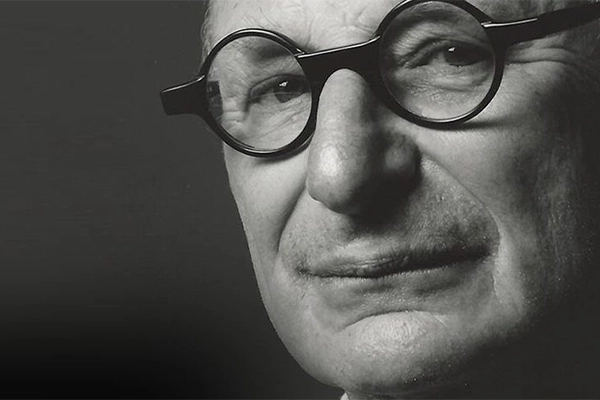
When the brand ceased to be merely design and became corporate identity
If Saul Bass contributed the concept and Vignelli contributed the system, Wally Olins took branding to an even broader level:
A brand is not just visual. It is organizational identity.
Olins was one of the pioneers in understanding that a brand does not exist solely in its logo or advertising.
It exists in:
Internal culture.
Corporate behavior.
Business strategy.
Institutional communication.
Global positioning.
Sustained reputation.
His vision transformed branding into a strategic discipline at the executive management level.
The context: companies growing faster than their identity
During the height of globalization, many companies were expanding internationally.
They were opening new markets.
They diversified their products.
They merged companies.
They acquired competitors.
But there was a problem:
Their identity wasn’t ready for that growth.
Communication was inconsistent.
The culture wasn’t aligned.
Perception varied by country.
The brand was fragmented.
Wally Olins understood that branding had to resolve that chaos.
Brand as an Expression of Business Strategy
One of his most powerful ideas was this:
A brand is not what you say you are.
It is the coherent expression of what you actually do.
This means that:
If you promise innovation, you must innovate.
If you promise excellence, you must deliver it.
If you promise approachability, your culture must reflect it.
If you promise leadership, your structure must support it.
A brand cannot be mere window dressing.
It must be strategic consistency.
Corporate Identity as a Competitive Advantage
Olins argued that a well-constructed identity enables:
Clear differentiation.
Greater institutional trust.
Greater consistency in communication.
Better international positioning.
Reduced commercial friction.
Attraction of aligned talent.
In other words:
Identity becomes a strategic asset.
Internal Branding: The Part Many Overlook
One of Olins’ most important contributions was emphasizing that the brand begins within the company.
If the team doesn’t understand:
Who they are.
What they stand for.
What values they uphold.
What vision they pursue.
External communication will be inconsistent.
For entrepreneurs and business owners, this is fundamental:
You cannot build a strong brand externally if there is no clarity internally.
Brand as an Institutional Narrative
Olins understood that companies need a clear narrative.
Not just to sell.
But to exist with coherence.
That narrative must answer:
Why do we exist?
What change do we bring about?
What do we stand for?
What aspiration do we promote?
What place do we occupy in the market?
Without a narrative, identity becomes superficial.
The difference between image and reputation
Olins made an important distinction:
Image is what you communicate.
Reputation is what the market confirms.
You can design an attractive image.
But if your behavior doesn’t back it up, your reputation weakens.
For today’s businesses, this means that:
Branding doesn’t end with design.
It continues in:
Service.
Experience.
Processes.
Customer service.
Internal culture.
Globalization and consistency
In an interconnected world, brands must function across multiple contexts.
Olins worked on projects where the identity had to:
Adapt culturally.
Maintain international consistency.
Respect local codes.
Preserve the global essence.
This requires a solid strategic framework.
Practical Application for Entrepreneurs
Ask yourself honestly:
Does my team clearly understand the company’s identity?
Is my value proposition aligned with my internal culture?
Is there consistency between what I promise and what I deliver?
Is my narrative clear and consistent?
Does my visual identity support my business strategy?
Could I expand without fragmenting my brand?
If the answers are ambiguous, your branding needs more structure.
Brand and Business Leadership
Olins understood that branding is a leadership responsibility.
It is not just the task of the designer or the marketing department.
It must be aligned with:
Strategic direction.
Executive vision.
Corporate decisions.
Organizational culture.
When leadership is not involved, the brand loses direction.
Identity as a tool for growth
A solid identity allows you to:
Integrate new lines of business.
Expand internationally.
Launch new products.
Reposition yourself strategically.
Adapt to market changes.
Without a clear identity, every expansion leads to fragmentation.
The strategic legacy of Wally Olins
Olins made it clear that:
Branding is not aesthetics.
It is structured identity.
And identity is one of the most powerful assets a company can build.
In saturated markets, where many compete on price or trends, a coherent identity becomes true differentiation.
Final Thoughts for Business Owners
If you want your business to grow sustainably, your brand must be more than just a logo.
It must be:
A clear narrative.
An aligned culture.
A coherent strategy.
Consistent communication.
A structured identity.
Because when a brand truly reflects the essence of the business, growth isn’t haphazard.
It’s structural.