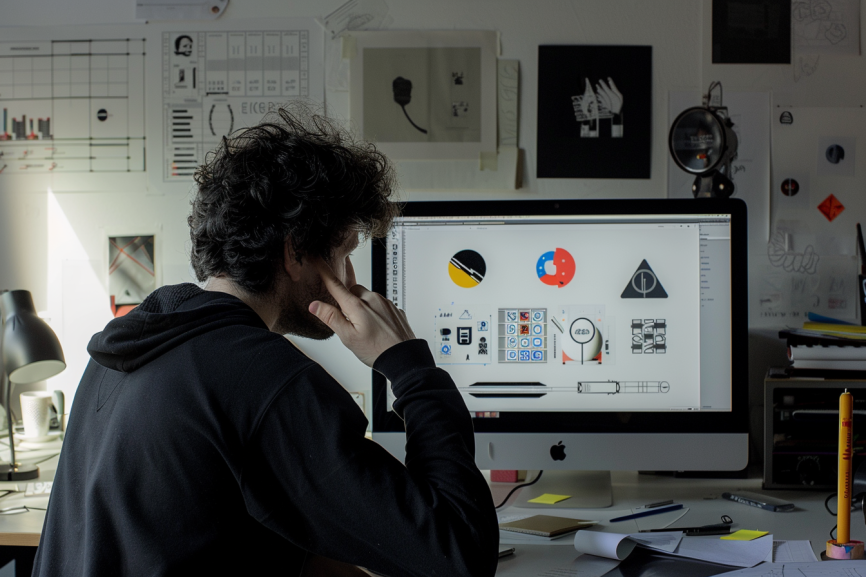
A logo is the visual representation of a brand. It’s the first thing customers see—and often what they remember most. However, designing an effective logo isn’t simple. Common mistakes can lead to designs that are ineffective, forgettable, or disconnected from the audience.
Below are the most frequent mistakes—and how to avoid them.
Overly complex designs
A common mistake is creating a logo overloaded with too many visual elements, colors, or typefaces. Complex logos are harder to understand and even harder to remember.
How to avoid it:
- Prioritize simplicity and clarity
- Limit your color palette (2–3 colors max)
- Use clean, recognizable shapes
Example: The Apple logo—a simple, clean apple—is universally recognizable.
Ignoring scalability
A logo needs to work at any size—from a business card to a billboard. If it contains too much detail, it can lose clarity when scaled down.
How to avoid it:
- Design with reduction in mind
- Test your logo at multiple sizes
- Ensure key elements remain clear and legible
Following short-lived trends
Designing a logo based purely on trends can be tempting—but it limits longevity. Trends change, and your logo can quickly feel outdated.
How to avoid it:
- Focus on timeless design rather than what’s currently popular
Example: Logos like Nike or McDonald’s have stood the test of time thanks to their simple, functional approach.
Poor typography choices
The wrong typography can make a brand look unprofessional or hard to read. Mixing too many fonts can also create confusion.
How to avoid it:
- Use clean, legible typefaces
- Avoid combining more than two fonts
- Customize typography if needed to create a unique identity
Ignoring the target audience
A logo must connect with the brand’s audience. Designing without understanding their preferences and expectations can result in a complete disconnect.
How to avoid it:
- Research and define your ideal customer
- Align style, colors, and typography with your brand personality
Conclusion
Avoiding these common mistakes can be the difference between a logo that works—and one that goes unnoticed. The key is to create a design that is simple, scalable, and timeless, while connecting with your audience and accurately representing your brand identity.