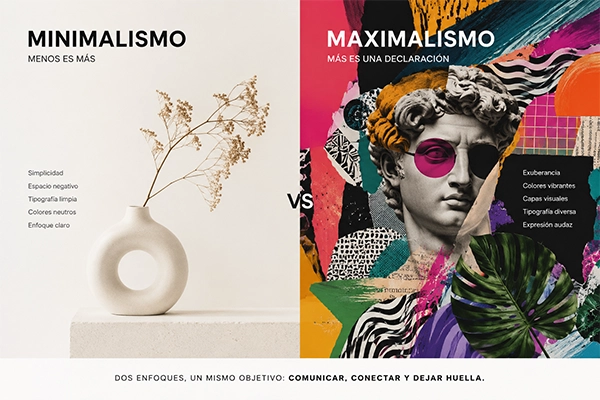
In the world of modern graphic design, trends come and go, but two aesthetic approaches have made a significant impact in recent decades: minimalism and maximalism. These two trends may seem like opposites, but both have left an indelible mark on the industry. In this article, we will explore how these two styles have evolved and how their principles are reflected in contemporary graphic design.
Minimalism: The Art of Simplification
Minimalism has been one of the most influential movements in modern graphic design. It is characterized by simplicity, the use of clean lines, and the reduction of visual elements to the bare essentials. For many designers, minimalism is not just a style, but a philosophy that emphasizes clarity and direct communication, eliminating everything superfluous.
The Rise of Minimalism in Graphic Design
Minimalism began to gain popularity in the 1960s and 1970s, largely as a reaction to the ornate and overly detailed styles of earlier design. Leading figures such as Dieter Rams, Massimo Vignelli, and Saul Bass embraced minimalism in their work, applying it to logos, posters, and products. In graphic design, the use of sans-serif typefaces, simple layout of elements, and the use of negative space made minimalism a highly effective and timeless style.
The Impact of Minimalism on Modern Brands
Today, many global brands have adopted minimalism as their primary visual approach. Logos such as those of Apple, Nike, and Google are clear examples of how minimalism can be powerful and distinctive. Through their simplicity, these logos have succeeded in conveying confidence, elegance, and clarity—fundamental elements for a modern brand.
Maximalism: The Return of Excess
While minimalism celebrates simplicity, maximalism goes in the opposite direction, embracing exuberance, color, and visual saturation. Maximalism isn’t afraid to fill the space with details, complex patterns, and a variety of colors, textures, and visual elements. It’s a style statement that defies traditional norms and stands out for its energy and boldness.
The Resurgence of Maximalism in Graphic Design
Maximalism has begun to resurface in recent years, influenced by trends in art, fashion, and digital culture. Designers such as Stefan Sagmeister and studios like Pentagram have explored maximalism, experimenting with the use of bright colors, diverse typography, and overloaded visual elements. This approach breaks away from the rigidity of minimalism, offering a new way to experience design that feels bolder and more vibrant.
Maximalism in the Digital Age
The rise of digital platforms and social media has allowed maximalism to become a dominant form of expression. User interface (UI) and user experience (UX) designers have embraced this approach to create visually stimulating designs, such as websites filled with images, animations, and bright colors that aim to capture the user’s attention. In this context, maximalism becomes a powerful tool for standing out and making an impact in a space saturated with content.
Minimalism and Maximalism in Graphic Design: Two Sides of the Same Coin
Although minimalism and maximalism seem like opposing styles, they both share a common goal: to communicate a message effectively and memorably. Rather than viewing these two trends as opposites, we can analyze them as two complementary approaches that graphic designers can use depending on the message they want to convey, the target audience, and the brand context.
When to use minimalism and when to use maximalism?
Minimalism works best when the goal is to convey a clear and professional image, especially for brands seeking to project sophistication and simplicity. On the other hand, maximalism is ideal for brands or projects that aim to grab attention in a bold and creative way, such as those in the entertainment, fashion, and art sectors, where experimentation and visual excitement are key.
The Fusion of Minimalism and Maximalism in Contemporary Design
Recently, some designers have begun to fuse elements of both trends, creating a hybrid style that leverages the best of both worlds. This approach seeks visual harmony between the structural simplicity of minimalism and the creative abundance of maximalism. The result is a design that can be both clean and energizing, offering a rich visual experience without losing clarity or coherence.
The Future of Graphic Design: Where Are We Headed?
Graphic design continues to evolve, and the debate between minimalism and maximalism rages on. What is clear is that both trends will continue to influence the future of design, but in increasingly hybrid ways that are tailored to the digital age. Technology, social media, and visual platforms will remain the primary drivers pushing the boundaries of design, leading designers to experiment and redefine what it means to create a powerful visual identity.
Technology as a driver of design evolution
Technology, especially digital tools and artificial intelligence, offers designers a range of infinite possibilities. From creating complex visual effects to experimenting with new forms of interaction, the graphic design of the future promises to be more inclusive, more accessible, and more interactive. The boundaries between minimalism and maximalism will continue to blur, allowing designers to create visual experiences that are both striking and functional.
The Need for Adaptable and Flexible Design
In a rapidly changing world, designers will need to be more adaptable than ever. The future of graphic design will likely strike a balance between the elegant simplicity of minimalism and the exuberant energy of maximalism, adapting to the needs of a diverse audience and a market saturated with content.
Conclusion: Exploring New Frontiers in Graphic Design
Modern graphic design is constantly evolving, and both minimalism and maximalism have been instrumental in defining the visual aesthetics of the 21st century. Both approaches offer unique opportunities to effectively express ideas and emotions, and they are likely to remain relevant as designers continue to explore the frontiers of the visual. The key lies in knowing when and how to use each approach to create visual experiences that resonate with audiences and leave a lasting impression.
A dynamic and diverse future of design
The future of graphic design will be dynamic, flexible, and increasingly experimental. Both minimalism and maximalism will remain essential in a designer’s toolkit, but the real challenge will be to fuse these styles in a way that makes the design relevant, effective, and capable of connecting emotionally with the audience.